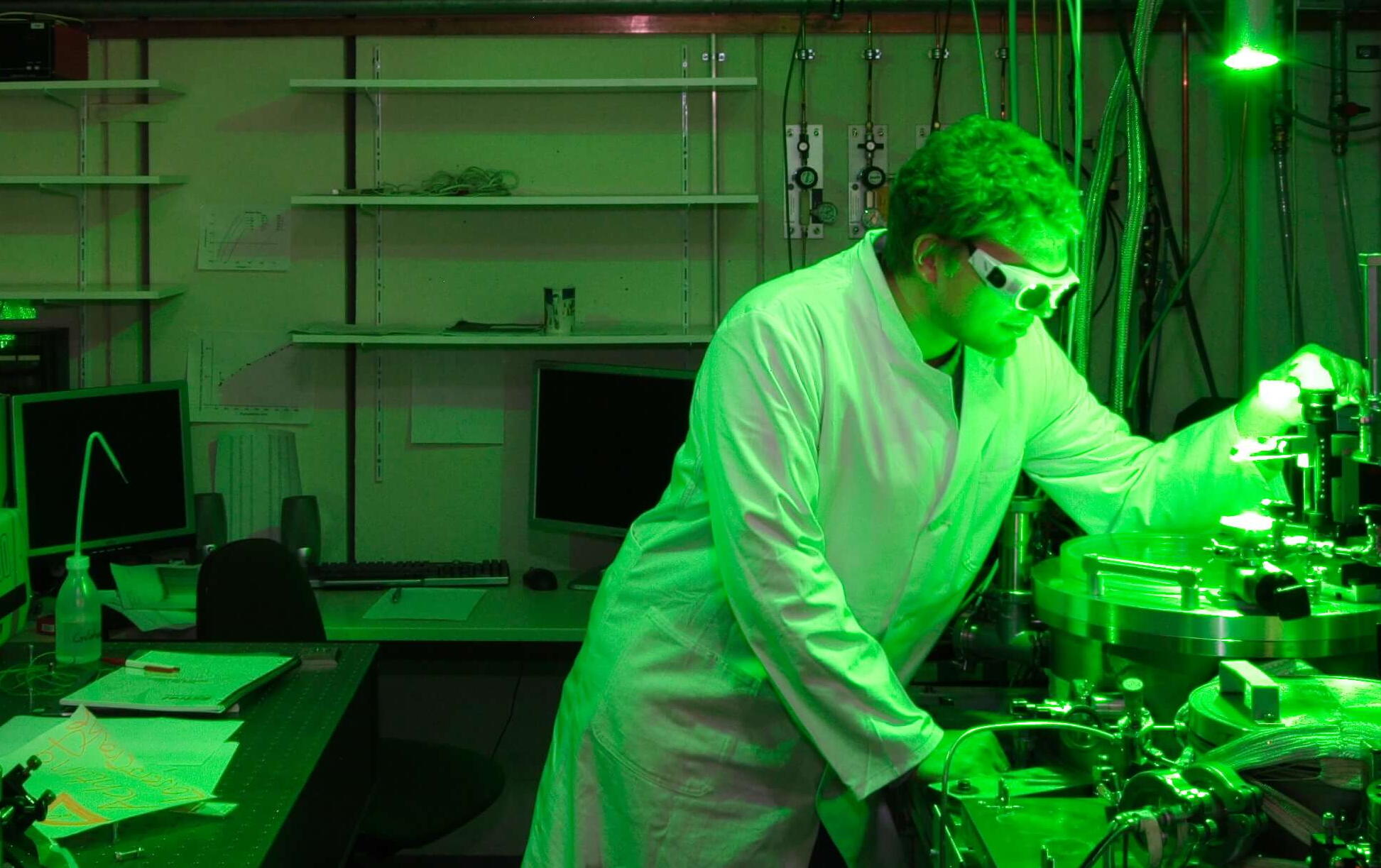
The Gen-Q doctoral programme involves 51 doctoral candidates working in the field of quantum science. Get to know them and find out what they are studying below.
University of Amsterdam
Paolo Da Rold
30C. Ion mediated Rydberg quantum computing

- Host organisation: University of Amsterdam, Institute of Physics
- Contact: p.darold[at]uva.nl
- About me: My background education includes a bachelor's degree in Physics, where I gained an interest in quantum information, and a master's degree in Scientific Computing, where I gained knowledge in quantum computing and machine learning. I completed it with a thesis about a learning model to characterize the noise in quantum devices. After university, I worked for some months in a company as a data scientist. In the meantime, I contributed to a research project with a colleague of mine and other researchers on the application of machine learning techniques to quantum entanglement. We have recently uploaded our work to arXiv.
- Thesis topic: What if two quantum systems could team up to build a better quantum computer and overcome the noise and scale problems? My PhD research on Ion-Mediated Rydberg Quantum Computing explores exactly this. I combine two types of quantum systems: trapped ions, stable and reliable, and Rydberg atoms, powerful but sensitive. By merging these two platforms, I aim to build quantum devices that are both scalable and reliable. A key challenge is noise, which disturbs fragile quantum states. I focus also on tailored strategies to control, mitigate, and correct errors in this new hardware approach, making quantum computers more stable, efficient, and practical.
- Individual Training Panel:
Supervisor: Arghavan Safavi Naini
Ashar Kamal
29C. Robust state preparations in spin boson systems

- Host organisation: University of Amsterdam, Institute of Physics
- Contact: -
- About me: I am a graduate in theoretical physics from Lund University in Sweden. My academic background is in theoretical particle physics and computational physics, where I focused on studying Beyond the Standard Model theories using numerical methods. After graduation, I took on a couple of shorter research roles, during which my interest in quantum many-body physics and quantum computing began to grow. Before joining Gen-Q, I was working in quantitative risk modelling at a start-up bank in Stockholm. This ultimately led me to pursue a PhD in this field through the Gen-Q programme.
- Thesis topic: Quantum technologies promise powerful new approaches to computing, but building reliable quantum devices requires a better understanding of how complex quantum systems behave. In my PhD, I will develop new theoretical and computational tools to study systems where quantum particles interact with their surrounding environment. These systems are challenging to model because their complexity increases rapidly as the number of particles grows. By combining theoretical ideas with efficient numerical methods, the project aims to create scalable simulation approaches that can describe realistic quantum devices. This will help design robust methods for preparing and controlling delicate quantum states and improve our understanding of how quantum devices behave in the presence of environmental noise. Ultimately, this work contributes to the development of scalable and reliable quantum technologies.
- Individual Training Panel:
Supervisor: Dr. Arghavan Safavi Naini
Pawni Manchanda
31C. Trapped ions in optical tweezers

- Host organisation: University of Amsterdam
- Contact: p.manchanda[at]uva.nl
- About me: I come from Delhi, India, and recently moved to Amsterdam to pursue a PhD in trapped ions in optical tweezers at the University of Amsterdam. I completed my master's degree in physics from the Indian Institute of Science Education and Research Kolkata. Before starting my PhD, I gained research experience through internships in different parts of the world. These experiences strengthened my interest in experimental physics and scientific problem-solving. Outside academia, I enjoy travelling, exploring new cultures and meeting new people. I also love dancing as it helps me relax and express myself.
- Thesis topic: Quantum computers have the potential to solve problems beyond the reach of today’s most powerful computers, but building large-scale quantum devices remains a major challenge. Trapped ions are one of the leading platforms for quantum computing. My PhD research explores new ways to control trapped ions using highly focused laser beams known as optical tweezers. We aim to develop faster and more efficient quantum operations and investigate how this technology can be scaled using integrated photonic devices. This research could help advance the development of practical quantum computers.
- Individual Training Panel:
Supervisor: Dr. Rene Gerritsma, Dr. Robert Spreeuw
Cui Ying
28A. Continuous atomic clocks

- Host organisation: University of Amsterdam
- Contact: y.cui[at]uva.nl
Science Park 904, 1098 XH Amsterdam - About me: My journey in Atomic Physics began during my undergraduate years, where I learned to build the lasers and electronic systems needed to observe quantum phenomena. From cooling atoms to near absolute zero to studying how they synchronize to emit light, my daily work is a combination of engineering and theoretical exploration. I am driven by a simple but meaningful question: how can we use these perfectly controlled, clean systems to understand the secrets of quantum behavior? To me, every laser beam aligned is a step closer to the fundamental physics that govern our universe.
- Thesis topic: Optical clocks are the most precise time measurement devices ever built, losing less than one second over the age of the universe. Such precision enables applications from fundamental physics tests to navigation and geodesy. However, current optical clocks operate in a pulsed manner and require long averaging times to reach the full accuracy. My PhD focuses on developing a new type of optical clock that can operate continuously using superradiance, a form of coherent emission. By reducing interruptions in the measurement process, these clocks can achieve high precision much faster, opening the door to real-time sensing and new applications.
- Individual Training Panel:
Supervisor: Florian Schreck
Mentor: Anaya Sitaram
University of Basel
Pierre-Armand Barbieri
16A. Semiconductor Si/Ge spin qubits

- Host organisation: University of Basel
- Contact: pierrearmand.barbieri[at]unibas.ch
- About me: I am originally from France and grew up in Alsace, a region located right next to Switzerland and Germany. I studied physics in Strasbourg, where I completed my Bachelor and started my master’s degree. I then went to Basel for an internship focused on spin qubits in the quantum coherence group. I later joined the University of Copenhagen for my master’s thesis in the center for quantum device at Niels Bohr Institute on superconducting qubits, gaining experience in different approaches to quantum computing. I recently started my GenQ PhD within the Quantum Coherence Group in Basel. My research focuses on electronic transport through molecular systems, with the long-term goal of contributing to the development of topological spin qubits for future quantum technologies.
- Thesis topic: The molQ project at the University of Basel Department of Physics is a research project exploring quantum. In collaboration with researchers from the University of Bern, we are developing tiny molecular systems that could become highly stable and energy-efficient quantum bits, or qubits. We fabricate our sample in the cleanroom and measure there electrical properties at temperature near absolute zero.
- Individual Training Panel:
Prof. Dr. Dominik Zumbühl
Raja Sanwal Farooq
18C. Phonon dynamics and thermal transport in 2D ferroelectric and magnetic materials

- Host organisation: University of Basel, Department of Physics
- Contact: rajasanwal.farooq[at]unibas.ch
- About me: I am from Islamabad, Pakistan, and I studied Physics at Quaid-i-Azam University, where I completed my Bachelor’s and Master’s degrees with academic distinction. I have worked in experimental physics labs, focusing on thin-film fabrication, laser-based experiments, and materials characterization to understand how structure influences properties at the nanoscale. I enjoy experimental research because it lets me turn simple questions into careful measurements and real results. This has shaped my interest in how precise control of materials and measurement can improve performance in advanced devices. Alongside research, I enjoy teaching and outreach, and I like explaining physics in a simple way to non-specialists. Outside the lab, I enjoy playing cricket and meeting new people.
- Thesis topic: My PhD research focuses on how heat moves through ultra-thin, two-dimensional materials that have special properties such as ferroelectricity and magnetism. In these materials, heat is carried by tiny atomic vibrations called phonons. By studying how phonons behave and interact in these systems, my work aims to improve understanding of thermal transport at the nanoscale. This knowledge is important not only for fundamental science, but also for future technologies that rely on controlling heat and energy at very small scales.
- Individual Training Panel:
Supervisor: Prof. Ilaria Zardo
Nick Grimm
21B. Quantum Sensing of two-dimensional magnets

- Host organisation: University of Basel, Department of Physics, Quantum Sensing Lab
- Contact: nick.grimm[at]unibas.ch
- About me: I hold an MSc in Physics from the University of Ulm, Germany, where I worked in Experimental Quantum Optics. During my master’s thesis, I demonstrated second-long coherence times of a nuclear spin coupled to a color center in diamond, an important building block for quantum technologies. I am currently pursuing my PhD in the Quantum Sensing Group in Basel, where we exploit these atomic-scale spin defects as quantum sensors. I enjoy tackling challenging problems, and my current research allows me to develop new experimental techniques while exploring fundamental physics.
- Thesis topic: In my PhD, I operate and develop a cryogenic scanning probe microscope based on individual spin defects. In this technique, a single spin located near the apex of a nanometer-sized diamond tip is scanned across a sample. Since the spin is extremely sensitive to magnetic fields, it acts as a quantum sensor that can map magnetic properties with nanometer resolution. My goal is to extend this microscope to operate under the demanding conditions of tesla-range magnetic fields and millikelvin temperature. These capabilities will enable to study a wide range of new phenomena in condensed matter physics, including quantum Hall systems and atomically thin two-dimensional magnetic materials.
- Individual Training Panel:
Supervisor: Prof. Dr. Patrick Maletinsky
Zoltán György
14A. Spin qubits in magnetic domain walls and skyrmions for quantum bus for spin qubits in semiconductor quantum dots

- Host organisation: University of Basel / Department of Physics
- Contact: zoltan.gyoergy[at]unibas.ch
- About me: I have completed my BSc and MSc studies in theoretical physics at ELTE Eötvös Loránd University, Budapest, Hungary. Early on, I became interested in quantum technologies because they combine the beauty of theoretical physics with potential practical applications. I worked on quantum computing based on single-electron (and hole) spins confined in semiconductor nanostructures. In my BSc thesis, I proposed bichromatic driving of spin qubits, which was soon experimentally demonstrated. I tailored my MSc studies around theoretical condensed matter physics; in my thesis, I investigated the limitations of the g-tensor formalism, a popular theoretical effective description of hole spin qubit driving.
- Thesis topic: Quantum computers are based on qubits, i.e. two-level quantum systems. Future, practically useful quantum computers will need millions of qubits. Spin qubits are promising due to their small size, which is expected to allow the integration of such a large number of qubits on a single chip, unlike many other qubit platforms. During my PhD, my research focuses on the theoretical study of spin qubits based on a single spin (Loss-DiVincenzo qubits) or on many spins, such as domain wall spin qubits. Besides the theoretical description of these systems, I also aim to propose new devices, featuring interesting physical properties or functionalities.
- Individual Training Panel:
Supervisor: Daniel Loss
Mentor: Jelena Klinovaja
Shahan Hawatian
15A. Hybrids qubits/qudits, topological excitations: Majoranas, parafermions. Interactions and topological effects

- Host organisation: University of Basel, Physics Department
- Contact: shahan.hawatian[at]unibas.ch
- About me: My physics education began in Lebanon at the American University of Beirut where I got my BSc in Physics. Afterwards, I joined the Erasmus Mundus Master Program in Quantum Technologies and Engineering (QuanTEEM) which allowed me to study in three different countries: France, Germany and Denmark. My master’s thesis was about topologically protected qubits using Majorana Zero Modes. I have also worked as a research assistant in the Quantum Sensing Group at the American University of Beirut.
- Thesis topic: Quantum computation suffers from the fact that qubits are sensitive to their environment and that qubit operations are faulty. Thus, scientists must come up with ways to make quantum computation less prone to errors. One such way is to utilize “Majorana fermions” to encode what are known as “topologically protected qubits”. Computation requires the modification of information, and for these qubits, this is done by moving certain Majorana fermions around each other, an operation commonly known as “braiding”, which has proven to be a fault tolerant way of performing quantum computation. These Majorana fermions belong to a more general class of quasiparticles called “parafermions”. My PhD project will explore how to realize such parafermions and how to perform operations in this context.
- Individual Training Panel:
Supervisor: Daniel Loss
Mentor: Jelena Klinovaja
Tamanna Kumari
19C. Phonon dynamics and thermal transport in Si/Ge heterostructures

- Host organisation: University of Basel, Department of Physics
- Contact: tamanna.kumari[at]unibas.ch
University of Basel, Department of Physics, Klingelbergstrasse 82, 4056, Basel, Switzerland
+41 61 207 55 89 - About me: A physicist by training from India, a country rich in diverse cultures and a profound scientific heritage, I hold a master's degree in Physics and have experience working in national laboratories in India. My research journey has been driven by a fascination with how fundamental laws translate into physical reality. I have experience in researching thermoelectric materials for low-cost waste-energy conversion and in quantum transport in epitaxial graphene for the Quantum Hall resistance standard. Now, as a Gen-Q PhD fellow at the University of Basel in Switzerland, I continue to explore materials science.
- Thesis topic: My PhD research focuses on phonon dynamics and thermal transport in Si/Ge heterostructures. One of the biggest challenges in developing quantum technologies is decoherence, which causes quantum systems to lose information. One of the decoherence sources is electron-phonon scattering and we plan to control phonons in designed heterostructures. Specifically, my work aims to create coherent phonons within Si/Ge superlattices. The goal is not only to limit decoherence but also to understand exactly how phonons contribute to both heat flow and electronic transport. Ultimately, engineering and controlling phonons we can translate fundamental quantum physics into the fabrication of real, next-generation devices.
- Individual Training Panel:
PhD supervisor: Prof. Ilaria Zardo, Department of Physics, University of Basel
Daniele Morotti
13C. Higher-order topological phases in magnetic systems and non-Hermitian systems, non-reciprocal phenomena

- Host organisation: University of Basel / Department of Physics
- Contact: daniele.morotti[at]unibas.ch
- About me: I hold both a Bachelor's and a Master's degree in Physics from the University of Padua, Italy. My interest in quantum technology and its related fields began during my Bachelor's thesis, which focused on the study of anyons in various Kitaev models. This interest further developed during my Master's thesis, where I carried out a systematic study of the electrical and thermoelectric transport properties of the spinful complex Sachdev–Ye–Kitaev model coupled to metallic reservoirs. Through this work, I developed a strong passion for non-equilibrium thermodynamics and, more specifically, for the study of quantum transport in quantum dots. I am currently a Gen-Q PhD in the Quantum Condensed Matter Theory and Quantum Computing Group at the University of Basel, where I have the opportunity to further pursue research in these fascinating areas of physics, which are also at the forefront of technological innovation.
- Thesis topic: Topological states of matter are a fascinating class of quantum phases characterized by global properties that are robust against local deformations. These states can give rise to unusual physical behaviors, such as special states that appear at the edges or corners of a system and remain stable against small perturbations. This PhD project explores how these topological properties emerge in quantum systems, with a focus on magnetic and non-Hermitian materials, and on phenomena where the response of a system depends on the direction of the external stimulus. The goal is to advance the understanding of novel quantum states that could contribute to future quantum technologies.
- Individual Training Panel:
Prof. Dr. Jelena Klinovaja
University of Freiburg
University of Haute-Alsace
Rohit Gupta
65C: Ordered supergraphene by Er intercalation: magnetic interaction via delocalized π- states

- Host organisation: Université de Haute-Alsace (UHA), Institut de Science des Matériaux de Mulhouse (IS2M), CNRS, Mulhouse
- Contact: rohit.gupta[at]uha.fr
15 rue Jean Starcky BP 2488 Mulhouse cedex FRANCE - About me: I grew up in India, where my curiosity about science motivated me to pursue physics. I hold an M.Sc. in Physics from the Indian Institute of Technology (IIT) Guwahati, India. Previously, I worked on “Realization of Strong-Coupling in Few-Layered GaSe Embedded in a high-Q DBR Microcavity” under the guidance of Dr. Rishi Maiti. I presented this work at multiple international conferences and received the “Best Oral Presentation Award at the International Workshop on Physics of Semiconductor Devices (IWPSD 2025)”, organized by IIT Roorkee, India. We also submitted a paper entitled “A Passive Daytime Colored Radiative Cooler with DBR-Engineered Color Selectivity.“ available on arXiv (arXiv:2608.15566)
- Thesis topic: My Ph.D. research is a part of the current race to explore the properties of graphene at critical points of its band structure, specifically in the region of very high electron doping, where the van Hove singularity and then the Lifshitz transition occur. In this region, the Fermi surface may exhibit a non-dispersive region where the bands are "flat," and significant electron-electron correlation effects are expected, potentially leading to the emergence of new physical properties (e.g., unconventional superconductivity). In this thesis, I will combine physicochemical characterizations using X-ray photoelectron spectroscopy (XPS), dispersion and Fermi surface measurements via Angle-Resolved Photoemission Spectroscopy (ARPES) and Low-Energy Electron Diffraction (LEED), along with low temperature Scanning Tunneling Microscopy (STM) and Scanning Tunneling Spectroscopy (STS) measurements, as well as synchrotron radiation experiments. I will investigate the magnetic interactions between these moments and how electrons become delocalized in the graphene π-band with this Fermi surface topology, and how to modify these interactions.
- Individual Training Panel:
Supervisor: Dr. Laurent Simon
Co-Supervisor: Prof. Dayen Jean-François
Mentor: Prof. Vincent Roucoules
Monsef Hamitouche
63D. Time-efficient quantum-inspired metaheuristics for solving multiperiod shelter location-allocation problems with evacuation orders

- Host organisation: University of Haute-Alsace, IRIMAS Research Institute
- Contact: +33 7 73 48 01 75
12 rue des Frères Lumière
68093 Mulhouse Cedex - About me: I am a computer science engineer with a strong interest in optimization, quantum computing, and artificial intelligence. I graduated with highest honors from the École Supérieure d’Informatique d’Alger, where I completed a Master’s thesis on Quantum Constraint Programming in collaboration with the Université de Technologie de Troyes (LIST3N-UTT), France. Since May 2026, I have joined the OMeGA team at the IRIMAS research institute (Université de Haute-Alsace), where I am working on the development of new optimization methods based on quantum-inspired metaheuristics, hybridized with artificial intelligence and/or exact methods.
- Thesis topic: My PhD research focuses on the development of advanced optimization algorithms inspired by quantum computing to address complex disaster logistics problems. It aims to enhance the exploration of large-scale search spaces through efficient quantum-inspired strategies. These approaches may be combined with artificial intelligence techniques and, where relevant, with exact methods, in a hybrid framework. The objective is to support decision-makers by providing timely and reliable solutions in critical situations.
- Individual Training Panel:
Supervisor: Lhassane Idoumghar, IRIMAS/UHA
Co-supervisors: Edward Keedwell, Exeter University / Mahmoud Golabi, IRIMAS/UHA / Abdennour Azerine, IRIMAS/UHA / Laurent Moalic, IRIMAS/UHA
Mentor: Abdelhafid Abouaissa, IRIMAS/UHA
Karlsruhe Institute of Technology
Shruti Roy
3C. Interfacial magnetism in topological heterostructures

- Host organisation: Karlsruhe Institute of Technology / Department of Physics / Institute for Quantum Materials and Technologies
- Contact: shruti.roy[at]kit.edu
Building Number: 425, Room Number: 324, Karlsruhe Institute of Technology (CN), Hermann-von-Helmholtz Platz 1, Eggenstein-Leopoldshafen 76344, Germany
+49 721 608-24690 - About me: I am from Bihar, India. I completed my bachelor's degree in Physics at Banaras Hindu University (BHU), Varanasi, followed by a master's degree in Physics at the Indian Institute of Technology (IIT) Delhi, where I developed a strong interest in condensed matter physics and thin-film technology. During my master's thesis, I worked on the pulsed laser deposition of SrRuO₃ thin films, investigating the influence of film thickness and strain on their magnetic properties. I also did an internship at the Solid-State Physics Laboratory (SSPL), DRDO, Delhi where I gained exposure to advanced characterization techniques, including XRD, XPS, SEM, FTIR, and Raman spectroscopy. I am currently pursuing my PhD at the Institute for Quantum Materials and Technologies (IQMT), Karlsruhe Institute of Technology (KIT), focusing on quantum materials and thin-film growth using pulsed laser deposition (PLD). Apart from research, I enjoy badminton, volleyball, singing, travelling, and exploring different cultures, architecture, and languages.
- Thesis topic: The search for next-generation materials for spintronic technologies has intensified in recent years. Thin-film heterostructures provide an ideal platform for combining different material systems, enabling the emergence of novel interfacial phenomena that are absent in the individual materials. My research focuses on heterostructures based on transition metal oxides (TMOs), where 3d and 5d compounds are combined to exploit the interplay between strong electron correlations and spin–orbit coupling. At their interfaces, effects such as symmetry breaking and charge transfer can give rise to new magnetic and topological phases with potential applications in future low-power memory and information-processing devices. During my PhD, I will grow high-quality epitaxial thin films using pulsed laser deposition (PLD) and investigate their interfacial magnetic and electronic properties. By performing transport measurements, I aim to understand how interface-driven effects give rise to emergent magnetic and topological phases in oxide heterostructures.
- Individual Training Panel:
Supervisor: Prof. Matthieu Le Tacon, Institute for Quantum Materials and Technologies, Karlsruhe Insitute of Technology
Co-supervisor: Dr. Giovanni Manfredi, Directeur de recherches, Institut de Physique et Chimie des Matériaux de Strasbourg
Chiara Speca
6A. Dynamic control of non-stationary noise processes in engineered quantum systems

- Host organisation: Karlsruhe Institute of Technology / Institute for Quantum Materials and Technologies (IQMT), Metelmann Group
- Contact: -
- About me: I come from a small town in Abruzzo, in central Italy, and I hold a Bachelor's degree in Physical Engineering from the Polytechnic University of Turin and a Master's degree in Physics of Complex Systems from the University of Turin. When I first heard about entanglement and qubits, I got curious and decided I wanted to work in quantum physics. During my Master's, I developed a theoretical background in statistical mechanics and stochastic processes, with a focus on quantum information. Alongside this theoretical training, I spent more than two years in Spain, first as an Erasmus+ student and later as a researcher at INMA (Institute of Nanoscience and Materials of Aragón, Zaragoza). There, I conducted experiments at temperatures near absolute zero to study quantum spin liquid phases, an exotic state of matter with potential applications in quantum technologies. Outside physics, I am always happy to try a new sport, explore a new place, learn a new language or meet new people.
- Thesis topic: Quantum technologies promise powerful new ways to compute, communicate and measure. However, quantum systems are extremely sensitive to their surroundings, and unwanted disturbances - known as noise - can disrupt their behaviour and reduce their performance. My PhD project focuses on a particularly challenging type of noise: non-stationary noise, which changes over time and is therefore difficult to predict and control. The project will develop new theoretical methods to understand how this changing noise affects engineered quantum systems, how it can be detected and characterised, and how its impact can be reduced. Ultimately, this work aims to improve our ability to reliably control quantum systems in realistic, changing environments.
- Individual Training Panel:
Anja Metelmann, Institute for Quantum Materials and Technologies, Karlsruhe Institute of Technology
Adam Mickiewicz University Poznań
University of Strasbourg
Henrique Miguel Álvares Pereira Lima Gonçalves
45D. Theory of decoherence of entangled spin qubits by classical spin waves

- Host organisation: University of Strasbourg / Institut de physique et chimie des matériaux de Strasbourg (IPCMS) / Dynamique quantique des nano-objets (Q-Dyno)
- Contact: henrique.goncalves[at]ipcms.unistra.fr
- About me: I grew up in Lisbon, Portugal, where I completed my Bachelor’s and Master’s in Engineering Physics at Instituto Superior Técnico. My fascination with theoretical physics and computational modeling led me to early research fellowships in plasma physics, giving me the chance to present my thesis work at international conferences and to work as an assistant teacher for undergraduate students. A semester abroad in Italy sparked a deep appreciation for new cultures, which later inspired me to serve as VicePresident of ESN Lisboa, helping international students feel at home. Today, I am excited to bring this blend of academic passion and intercultural experience to my PhD at IPCMS in Strasbourg.
- Thesis topic: Quantum computers use tiny quantum systems called qubits to store and process information. My PhD research investigates how two qubits placed far apart could interact with each other through waves of magnetism, known as spin waves. I aim to understand how these interactions can help connect distant qubits, but also how interactions with their surrounding environment can cause them to lose their delicate quantum properties — a process called decoherence. By developing theoretical models and computer simulations, my research seeks to better understand these processes and contribute to the development of new approaches for connecting quantum devices.
- Individual Training Panel:
PhD supervisor: Giovanni Manfredi
Marielle Hachem
55C. Spin resonance at the nanoscale

- Host organisation: University of Strasbourg, Institute of Physics and Chemistry of Materials of Strasbourg (IPCMS), CNRS UMR 7504
- Contact: m.hachem[at]unistra.fr; marielle.hachem[at]etu.unistra.fr
23 rue du Loess, BP 43, 67034 Strasbourg - About me: I am a Lebanese Physicist with a Bachelor’s Degree from Notre Dame University Louaize, and a Master’s degree from the American University of Beirut. I have three years of professional experience as a Physics Instructor and Laboratory Instructor at AUB, alongside hands-on research in experimental condensed matter physics, magnetism, and spintronics. My research focuses on magnetic thin films and spin pumping phenomena, through which I developed strong expertise in film deposition, broadband ferromagnetic resonance, and advanced material characterization techniques, including SEM, EDX, and profilometry. My master’s thesis resulted in a published work and was awarded both the Best Physics thesis award at AUB and the first prize at the IEEE Lebanon student competition of 2025. Guided by the principle expressed by Richard Feynman,” What I can not create, I do not understand”, I hold a firm belief that hands-on experimentation is fundamental not only to understanding physics at its core, but also to advancing future technologies.
Beyond academics, I enjoy painting, colors, and nature. It brings me a sense of relaxation. Also, on a personal note, coming from a culturally rich Lebanese background, I value adaptability, resilience, and perseverance, qualities that have shaped my ability to navigate challenges and continue striving toward contributing meaningfully to scientific advancements. - Thesis topic: The current PhD topic aims to further enhance the magneto resistive detection technique for spin resonance at the nanoscale and extend its application to paramagnetic materials, low-temperature operation, and intermediate-scale characterization for spin-qubit technology and other emerging quantum technologies. The core objective, at the first stage, is to establish a versatile magneto resistive platform with the capacity to explore spin resonance beyond conventional cavity-based methods, and to make electrically integrated and spatially selective spin resonance compatible with microelectronic environments. A second phase of the project will be dedicated to the implementation of magnetic imaging capabilities via the use of inhomogeneous external control fields. This strategy will enable the spatially selective measurement of the spin dynamics and the local characterization of the material properties. Finally, the proposed methodology will be used to address a range of systems that are of significant importance in the field of quantum technologies, including molecular and semiconductor-based spin qubits, ultrathin ferromagnetic films, and two-dimensional magnetic materials. Also, contribute to the development of robust characterization tools that support the integration of spin-based materials into next-generation quantum devices.
- Individual Training Panel:
Supervisor: Matthieu Bailleul
Ramy Harib
50D. LDPC codes for error correction with neutral atoms

- Host organisation: University of Strasbourg
- Contact: rmsharib[at]etu.unistra.fr
- About me: I am Ramy Harib, from Tripoli, Libya. My academic background bridges engineering and theoretical physics, beginning with a BSc in Electrical and Electronics Engineering from the University of Tripoli, followed by an MSc in Physics at the University of Bologna. I am deeply passionate about expanding scientific access and community leadership; I co-founded QLibya to promote quantum education and established Libya's first IEEE student branch. A pivotal experience that shaped my career trajectory was my summer internship at CERN; as the first Libyan student in this highly competitive program, I had the privilege to contribute directly to sensor characterization for the ATLAS project.
- Thesis topic: Quantum computers hold immense potential for solving complex problems, but they are highly sensitive to environmental noise and computing errors. My PhD thesis focuses on making these machines reliable through Quantum Error Correction (QEC). Specifically, I will develop new simulation methods to study and optimize QEC codes, which dictate how we design and connect physical qubits to protect fragile quantum data from being lost or corrupted. By exploring advanced decoding algorithms, this research aims to efficiently identify and fix errors. Furthermore, I will collaborate with the aQCess experimental team in Strasbourg, applying these theoretical solutions to real quantum hardware.
- Individual Training Panel:
Supervisor: Guido Pupillo
Co-Supervisor: Jerome Dubail
Letizia Loparco
47C. Metrological-grade quantum cascade laser at 7.5 μm

- Host organisation: University of Strasbourg, European Center for Quantum Sciences (CESQ), Institut de Science et d'Ingénierie Supramoléculaires (ISIS)
- Contact: loparco[at]unistra.fr
About me: I started my journey in Physics in 2019 at Sapienza University of Rome. For my Master’s degree, I moved to Bologna, where I studied Materials Physics and Nanoscience. During my studies, I had the opportunity to attend courses on quantum technologies, which sparked my enthusiasm for the field and convinced me that I wanted to pursue a career in quantum science. For my Master’s thesis, I worked on the characterization of a magneto-optical trap for rubidium atoms, gaining my first hands-on experience with atomic physics experiments. I later met my current supervisor, Cyrille Solaro, who gave me the opportunity to continue working in this field in Strasbourg, and I am really looking forward to seeing where this journey will take me next! - Thesis topic: There are still many open questions about the Universe and the fundamental laws that govern it. One way to look for new answers is to test whether some quantities that we usually consider constant are truly constant everywhere and at all times. My PhD focuses on the electron-to-proton mass ratio. Molecular vibrations depend on this ratio, so high-precision measurements of their vibrational frequencies can be used to search for extremely small variations in its value. To perform these measurements, I will develop and stabilize a highly precise Quantum Cascade Laser and use it to probe SrH⁺ molecular ions, looking for signatures that could point towards new physics.
- Individual Training Panel:
Cyrille Solaro
Shreejith Malenki
43B. Berry curvature quantum memory and logic devices

- Host organisation: University of Strasbourg, Institute of Physics and Chemistry of Materials of Strasbourg (IPCMS)
- Contact: shreejith.malenki[at]ipcms.unistra.fr
- About me: I was born and brought up in India and completed my Bachelor’s and Master’s degrees at the Indian Institute of Science Education and Research Bhopal (IISERB). My research interests are centred on solid-state physics, particularly two-dimensional van der Waals materials and their heterostructures. During my Master’s, I worked on the growth of single crystals, including naturally occurring heterostructures, and investigated their magnetic and other physical properties. This experience has shaped my interest in quantum materials and their potential for developing new electronic and quantum technologies.
- Thesis topic: My PhD research focuses on the electronic, magnetic, and quantum properties of two-dimensional (2D) van der Waals materials and their heterostructures. I will explore how these properties can be controlled in 2D heterostructures, using transport studies to understand the role of electrical gating, dielectric environments, magnetic fields, and interactions between different layers. The research will also explore emerging directions such as Berry-curvature engineering and quantum memory, investigating how quantum phenomena in 2D heterostructures can be harnessed for future information-processing technologies. Ultimately, my work aims to develop new functionalities in 2D materials and heterostructures and contribute to the development of future quantum hardware, spintronic, and nanoelectronic technologies.
- Individual Training Panel:
Supervisor: Prof. Jean-François Dayen, University of Strasbourg
Ángela Martínez
34B. Electromechanical control of light-matter interactions in van der Waals heterostructures towards quantum sensing

- Host organisation: University of Strasbourg/CNRS/Institut de Physique et Chimie des Matériaux de Strasbourg (IPCMS)/Département Magnétisme des Objets NanoStructurés (DMONS)/Nano-optics and low-dimensional materials
- Contact: angela.martinez[at]ipcms.unistra.fr
- About me: I studied a BSc in Physics at the University of Alicante (Spain) where my bachelor’s thesis focused on developing distributed‑feedback lasers through the study of luminescent organic molecules. I then continued with a MSc in Advanced Physics: Nanophysics and Quantum Materials at the University of Oviedo (Spain) with a master’s thesis on characterizing the optical emission of quantum light emitters at room temperature in Van der Waals materials. Throughout my academic journey, I have gained in-depth knowledge of quantum science and technology. This has allowed me to understand the fundamental importance of the field for the development of quantum information and communication technologies and it has deeply motivated me to embark on a career in this area.
- Thesis topic: The thesis is about electromechanical control of light matter interactions in Van der Waals materials. It aims to design nanomechanical resonators from suspended van der Waals heterostructures in which the light-emission properties are electro-mechanically and opto-mechanically controlled. This system also allows probing and controlling the local mechanical strain as well as the interfacial coupling between the 2D materials forming the heterostructure. It will be studied in a closed-cycle cryostat integrated within an optical set-up that enables optical.
- Individual Training Panel:
Supervisor: Stéphane Berciaud